
Overview
This endpoint is used to trigger the execution of a single existing Scheduled Task. To consume it, you must be an Authenticated User. Once you have obtained a valid token, it must be passed on the call.
Endpoint
An example of this endpoint for server XX is:
https://xx.api.sellercloud.com/rest/api/ScheduledTasks/{id}/ExecuteTask
For your server, the endpoint will be:
https://{your_server_id}.api.sellercloud.com/rest/api/ScheduledTasks/{id}/ExecuteTask
Request
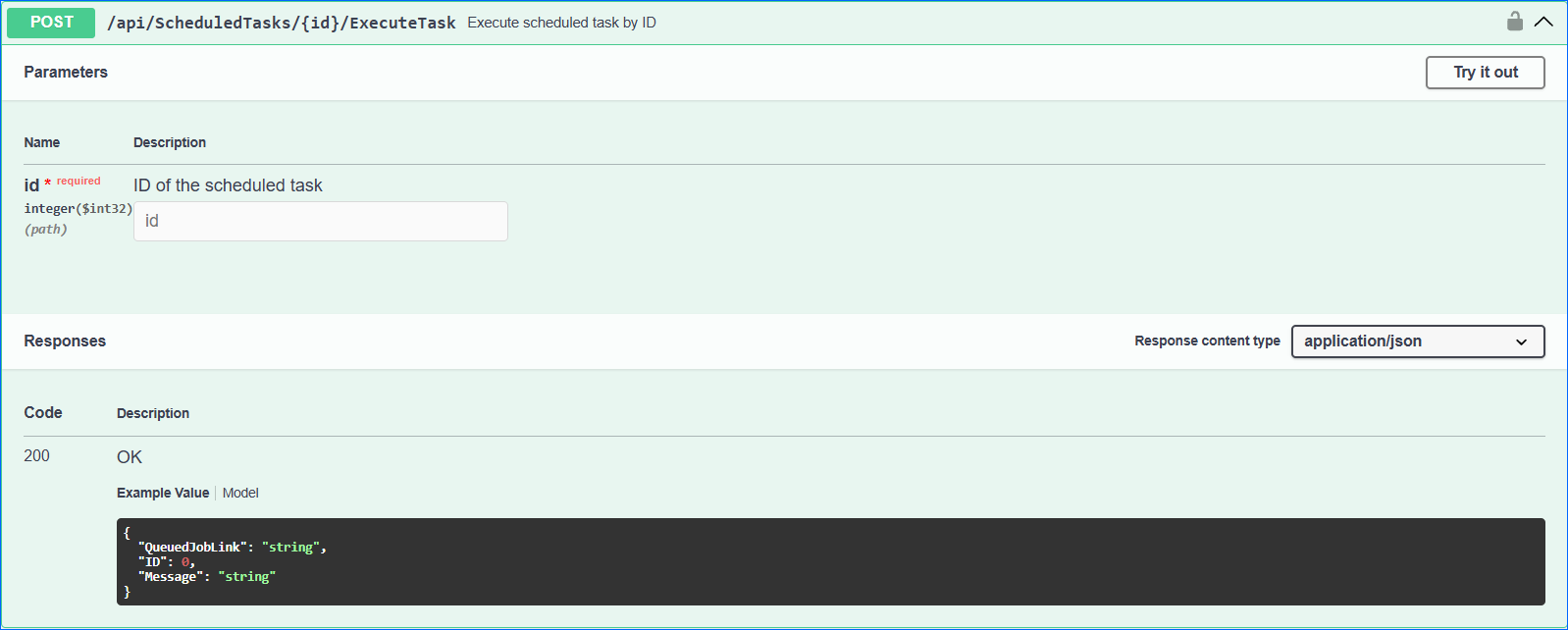
- Method Type: HttpPost
- Authorization: Use Bearer Token + token received from token authentication
- Header info: Content-Type: application/json
- Parameters: ID of the existing Schedule Task
| Parameter | Data Type | Description | Is Required |
| id | integer | The ID of an existing Scheduled Task. | Yes |
Response
- If the user is authenticated and provides a valid Scheduled Task ID, then the response will be Status Code 200 => OK, with the ID of the new Queued Job that was created and a link to the queued job in JSON format.
- If the user is not authenticated, then the response will be Status Code 401 => Not Valid Token.
- In case of an error, the response will be Status Code 500 => Internal Server Error.
Example Response
{
  "QueuedJobLink": "string",
  "ID": 0,
  "Message": "string"
}
Demo in C#
static async Task Main(string[] args)
        {
            await GetExecutionHistory();
        }
static async Task GetExecutionHistory()
{

// Valid ID of a scheduled task can be found through Delta UI
int taskID = 28142;

// URL for downloading execution history
string url = $"http://tt.cwa.sellercloud.com/rest/api/ScheduledTasks/{taskID}/ExecuteTask";

// Valid token must be provided here
string token = "test token";

using (HttpClient client = new HttpClient())
{
client.DefaultRequestHeaders.Authorization =
new AuthenticationHeaderValue("Bearer", token);
HttpResponseMessage responseMessage = await client.GetAsync(url);

var content = responseMessage.Content;
}
}
public class QueuedJobResponse
    {
        public string QueuedJobLink { get; set; }
public int ID { get; set; }
}